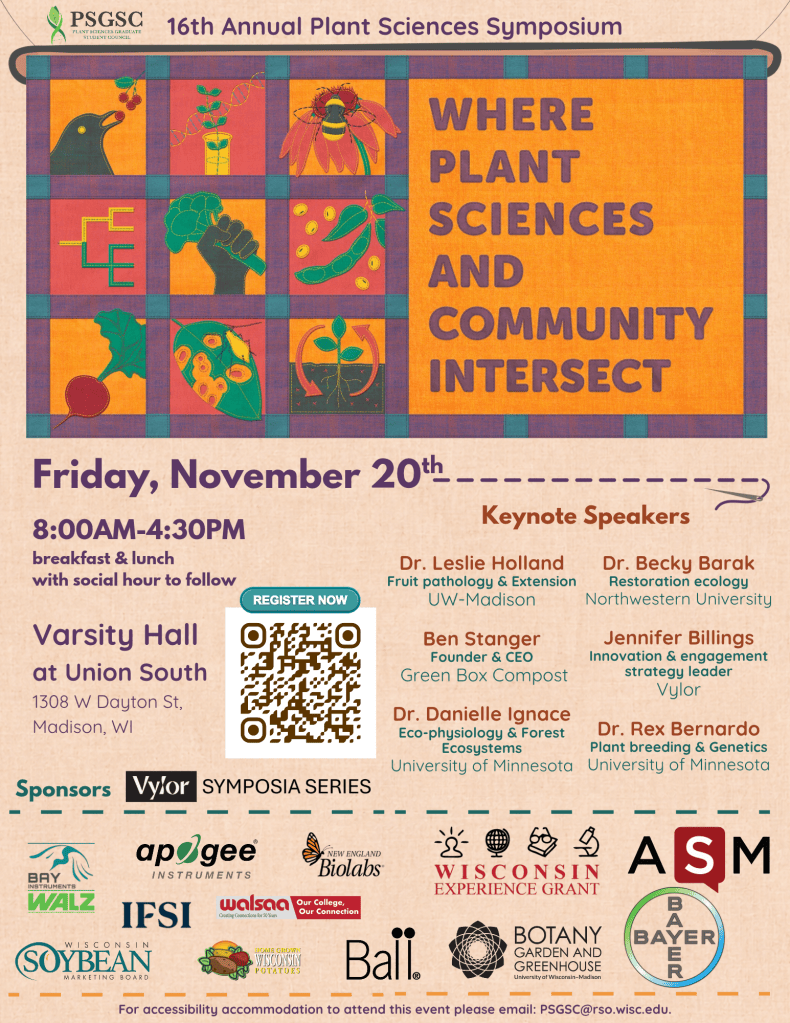
The UW – Madison Plant Sciences Graduate Student Council (PSGSC) is delighted to present our 16th Annual Plant Sciences Symposium on Friday, November 20th from 8AM – 4:30PM at Varsity Hall I & II of Union South on UW – Madison’s campus.
This year’s symposium is titled: Where Plant Sciences and Community Intersect, emphasizing work that extends beyond the lab and connects with real world needs, especially work that supports communities, build resilience, and contributes to the well-being of global citizens.

This event is part of the Vylor Symposia Series. PSGSC is grateful for their continued collaboration and support in fostering plant science connections across UW – Madison and beyond.
Keynote Speakers
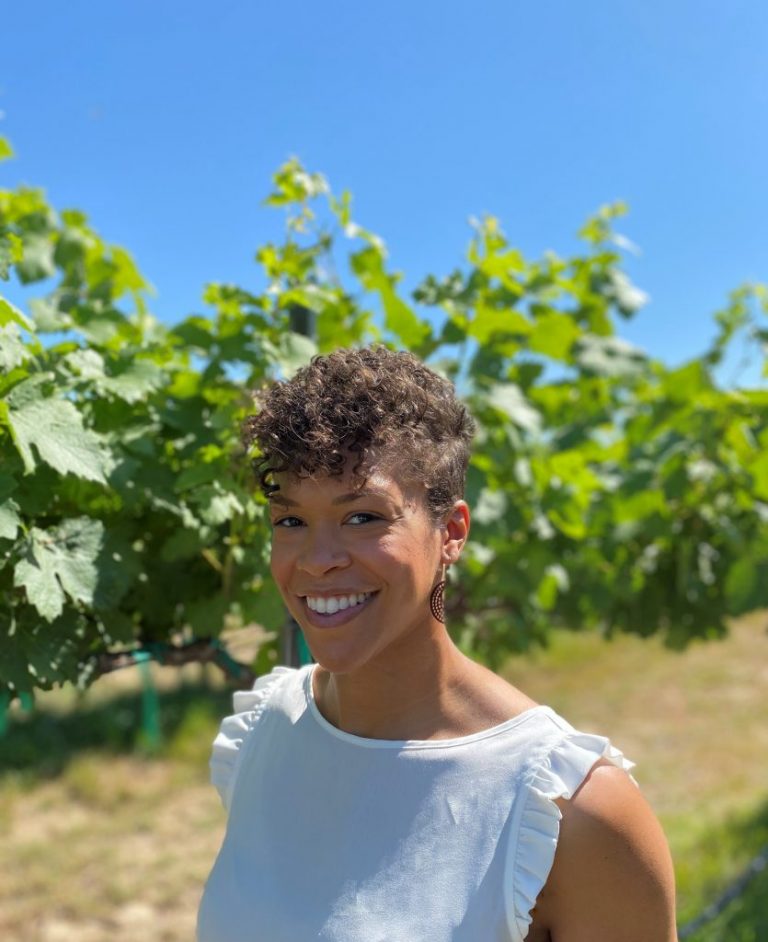
Dr. Leslie Holland
University of Wisconsin-Madison
Talk Title:“From the Marsh to the Mycobiome: Connecting Cranberry Fruit Rot Research with Grower Priorities.”
Leslie Holland is an Associate Professor and Extension Specialist in the Department of Plant Pathology at the University of Wisconsin–Madison, where she leads an applied fruit crop pathology program focused on improving disease management in perennial fruit systems.
Since joining UW–Madison in 2020, her research has focused on the biology and epidemiology of pathogens affecting cranberries, grapes, apples, and strawberries, with an emphasis on sustainable disease management strategies.
Her work combines field trials, laboratory studies, and molecular tools to better understand disease development and improve management practices, including fungicide application timing. Through close collaboration with growers, processors, and industry partners, she translates research findings into practical, regionally relevant recommendations that support productive and resilient fruit cropping systems in the Upper Midwest.
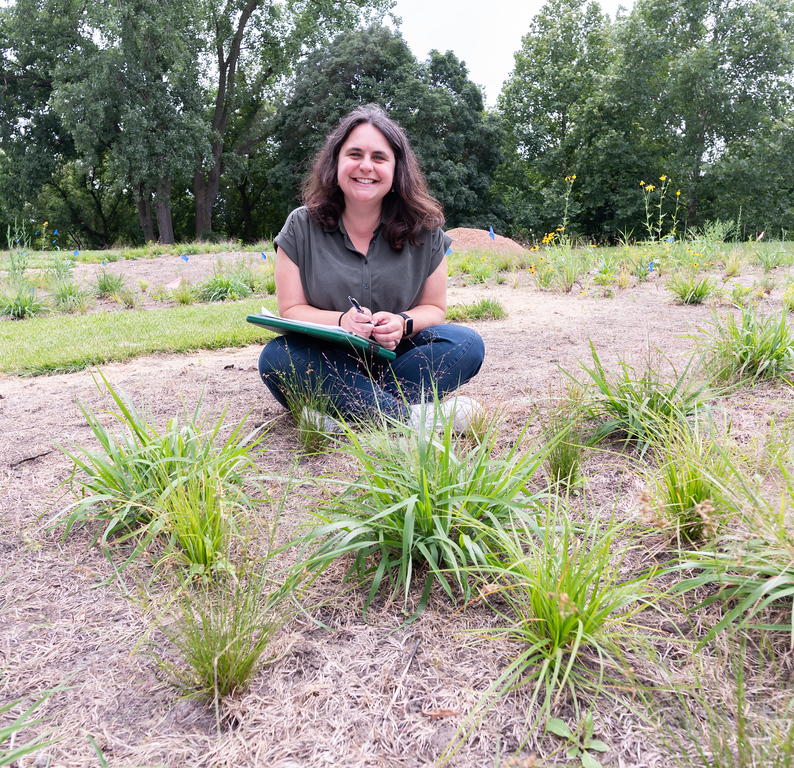
Dr. Becky Barak
Northwestern University
Talk Title: “Rethinking lawns: lawn conversion and enhancement for ecosystem services in Chicago parks.”
Becky Barak is a Conservation Scientist and seed bank curator at Chicago Botanic Garden, and an Adjunct Professor at Northwestern University in the Program in Plant Biology and Conservation. She studies seed biology and biodiversity in tallgrass prairies, and decision-making for restoration, particularly seed mix design.
Becky works with collaborators to apply these biodiversity questions to studying lawn alternative plantings though the Rethinking Lawns project (rethinkinglawns.org). The Rethinking Lawns team studies the ecosystem services of lawns and lawn alternatives, and their potential to contribute to conservation, in a series of experimental plantings and parks in Chicagoland.
The students in Becky’s lab study a variety of topics related to conservation and restoration in the Chicago area. Becky has a Masters and Ph.D. in Plant Biology and Conservation from Northwestern University and Chicago Botanic Garden.
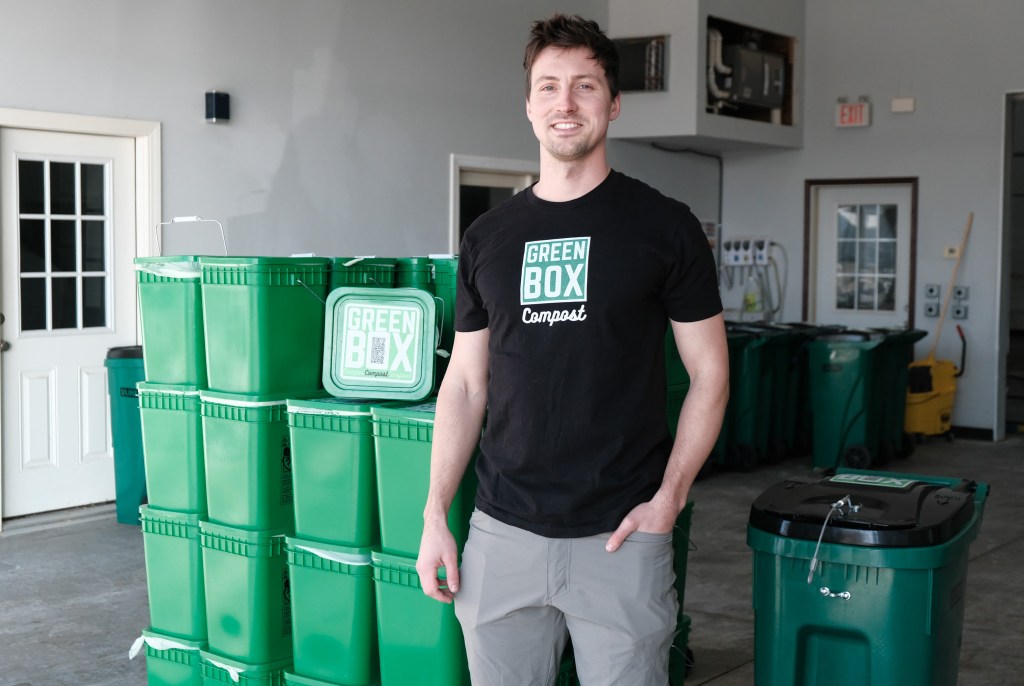
Ben Stanger
Green Box Compost
Talk Title: “Composting for Community; Working Together to Replenish Our Soils.”
Ben grew up in a family that interacted with soil intimately. They prided themselves on their large vegetable garden, and composted the scraps from their plates, turning them into nutrients for next year’s garden. He knew this natural cycle from practice, and wondered if there wasn’t a way to make it accessible to people with less time and space.
In 2017, after working at a green home builder and a sustainable seafood company, he discovered a composting company’s van making its rounds. He resolved to learn more about the industry, with an eye to helping his hometown of Madison access this important service. In 2021, he founded Green Box.
When not composting, you might find him playing ultimate frisbee, creating ceramics, or reading a book.
Jennifer Billings, MSc
Vylor R&D Innovation & Engagement Strategy Leader
Talk Title: “Collaborations Accelerate Innovation.”
As a member of the R&D Operations Leadership Team, Jennifer leads collaborations and engagements with key stakeholders to accelerate innovation globally and advance Vylor’s aspiration to help feed the world.
Jennifer is also the co-leader of the Vylor Veterans Network. Prior to joining Vylor, Jennifer worked 15 yrs for the U.S. government and the United Nations. She has lived previously in Jerusalem, Italy, South Africa, Honduras, Dominican Republic, Nepal, and Afghanistan. Jennifer holds a MSc in Agribusiness from University of London and is a U.S. Army veteran.
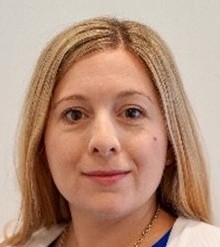

Dr. Danielle Ignace
University of Minnesota
Talk Title: “Restoring Ecosystems from the Ground Up: The Importance of Soil Health and Biodiversity for Building Resilience on Tribal Lands.”
Danielle Ignace is an Associate Professor of Forest Resources at the University of Minnesota and Research Associate at Harvard Forest. A plant physiologist and ecosystem scientist, she focuses on global change challenges while amplifying Indigenous knowledge and perspectives through research, teaching, and outreach.
An enrolled Coeur d’Alene tribal member, Dr. Ignace advocates for equity and inclusion in STEM and fosters collaborations between Indigenous communities and scientists.
She chairs the Traditional Ecological Knowledge Section of the Ecological Society of America and the Equity, Diversity, and Inclusion Committee of the American Society of Plant Biologists. She also serves as Associate Editor for Elementa.
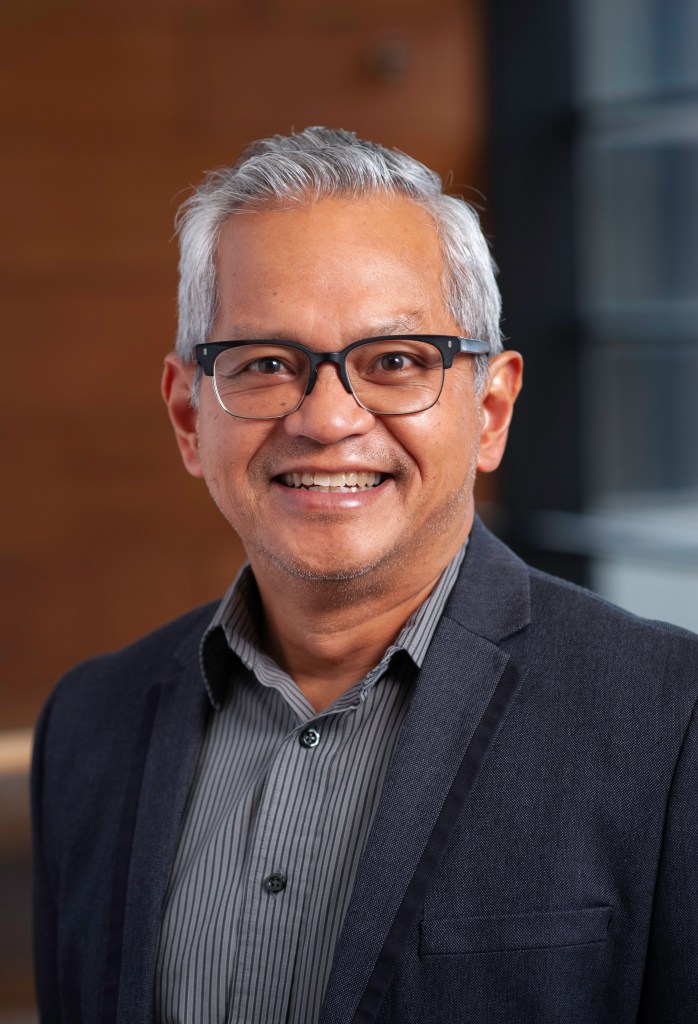
Dr. Rex Bernardo
University of Minnesota
Talk Title: “The People Part of Plant Breeding.”
Rex Bernardo is a Distinguished University Teaching Professor and endowed chair in maize breeding and genetics at the University of Minnesota, where he also serves as director of the Plant Breeding Center. He obtained his undergraduate degree in the Philippines in 1984 and his Ph.D. degree in plant breeding from the University of Illinois in 1988.
Rex developed the widely used genomic best linear unbiased prediction or GBLUP procedure in 1994, and most of his work has focused on marker-assisted breeding. Rex teaches graduate courses in plant breeding and in professional skills for scientists, as well as an undergraduate course on coffee. He has written two textbooks, entitled Breeding for Quantitative Traits in Plants and Essentials of Plant Breeding.
In his leisure time Rex enjoys playing the acoustic guitar, going tandem biking and swing dancing with his wife, and spending time with their six adult F1 progeny and four F2 progeny.